Real Estate Listing Marketing Checklist: From Photos to PDF Brochures
A real estate listing marketing checklist runs in four stages: prepare the property and the photography, build the materials (listing copy, brochure, flyer, signage), launch across portals and your own channels, then follow up. Most listings fail at the last stage, not the first.
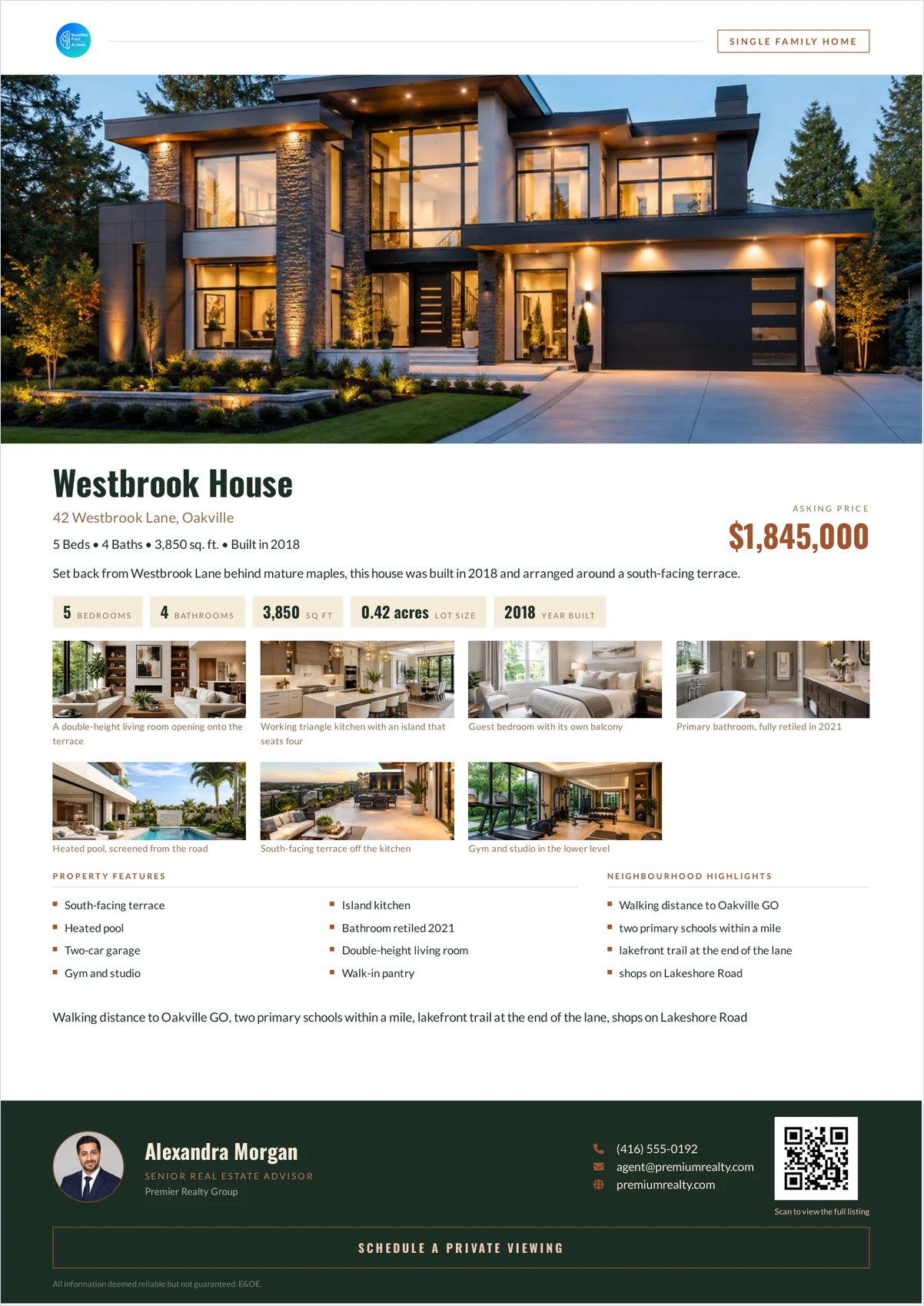
What needs doing before the photographer arrives?
The photography sets the ceiling for everything downstream, and nothing later raises it.
- Confirm what the seller will and will not allow published — full address, interior shots, anything identifying.
- Declutter and depersonalise the rooms being photographed.
- Check the lighting at the time of day the shoot is booked.
- Agree the shot list: exterior, main living space, kitchen, primary bedroom and bathroom, outdoor space, anything unusual.
- Ask for the original files, not a download link that expires or a compressed set.
Which listing facts should you gather first?
Collect these once, properly, and every piece of material afterwards is assembly rather than research.
| Field | Watch for |
|---|---|
| Price | Agreed with the seller, in writing |
| Address or location | At the precision the seller agreed to |
| Beds and baths | Counted the way your board counts them |
| Floor area | With the unit, and the basis of measurement |
| Lot size | Frequently skipped, frequently asked about |
| Year built | From a record, not an estimate |
| Features | Six to ten concrete items |
| Neighbourhood | Three or four checkable facts |
| Licence details | Whatever your regulator requires on advertising |
What materials does a listing need?
In this order, because each one feeds the next.
- Listing description. The long version. Everything else cuts down from it.
- Photo captions. One per photograph you will actually use.
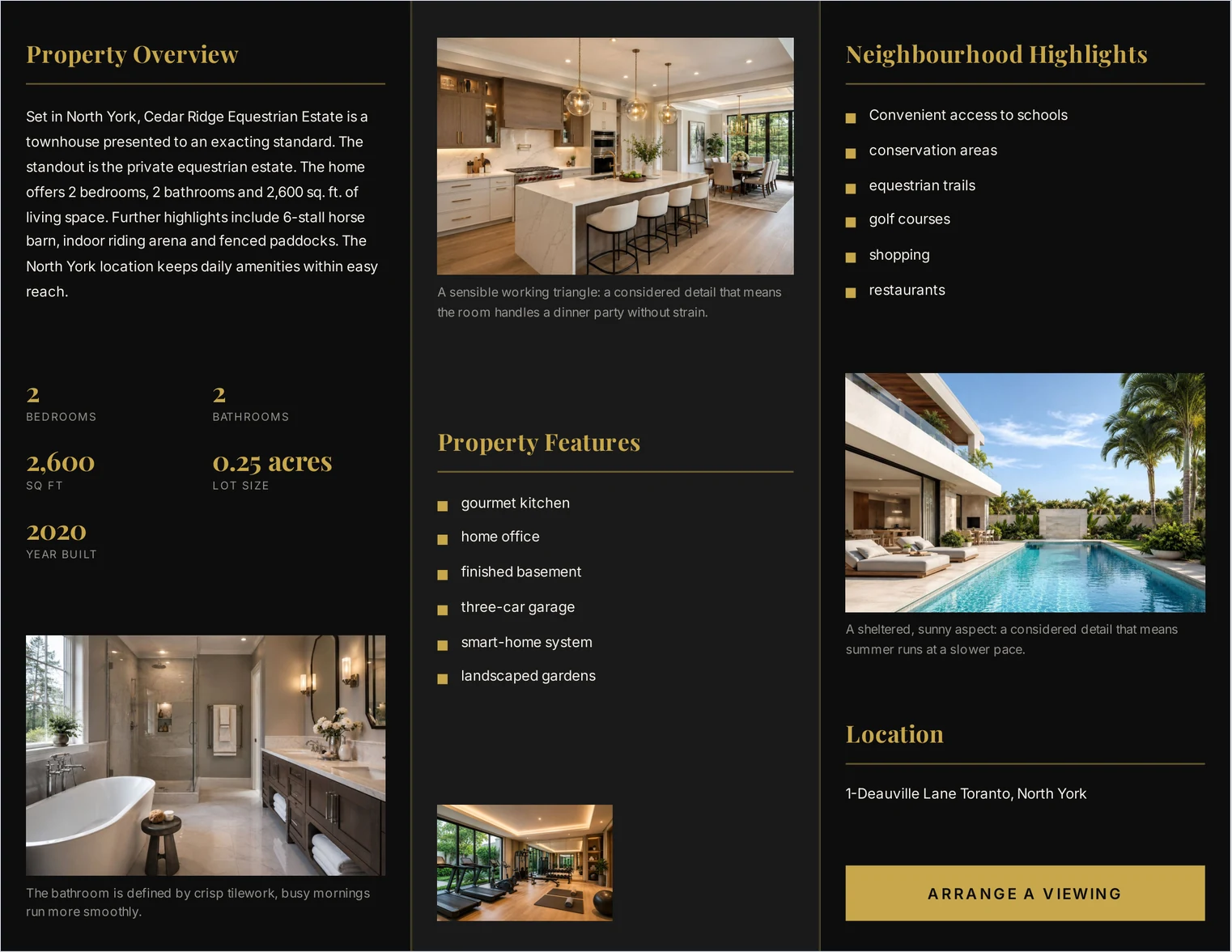
- Brochure or flyer. See flyer vs brochure for which, and what to include for the fields.
- QR code pointing at the listing page, not your homepage.
- Signage and window card. Larger type, far less text.
- Social assets. Cropped from the same photographs so the listing looks like one campaign.
Where should the listing go live?
- Portal listings live, with the full photo set and the long description.
- Brochure PDF uploaded wherever buyers can download it.
- Printed copies at the property — more than you think you need.
- Email to your own list before the portals index, if your rules allow it.
- Social posts scheduled, not all on the same day.
- Signage up, and the QR code on it tested from the pavement.
Follow up — the stage that gets skipped
Everything above is preparation. This is the part that produces offers, and it is the part that gets abandoned when the next listing arrives.
- Send the brochure PDF to everyone who viewed, the same day.
- Keep a record of who asked what — the questions repeat, and the answers belong in the listing copy.
- Check which material is being scanned or downloaded, and drop what is not.
- Refresh the photography if the listing runs past a season. A summer garden in a November listing undermines everything else on the page.
- Report to the seller on a schedule, with numbers rather than reassurance.
What should you report to the seller?
Sellers get anxious in silence, and a campaign that is working looks identical to one that is not if nobody says anything. Report on a fixed schedule rather than when there is news, because the schedule is what stops the absence of news being read as bad news.
Four things, in numbers rather than reassurance: how many enquiries and viewings since the last report, what the feedback said about the price, which material is being downloaded or scanned, and what you are changing next. The last one matters most — a report with no action in it invites the conversation about price whether or not price is the problem.
Keep the records as you go. Reconstructing a month of viewings from memory the night before a seller call is how the numbers stop being true.
What should you reuse between listings?
Your details, your branding, your template, and your process. Not your description — a description recycled between properties is the fastest way to make both sound generic.
The practical test: if a buyer held two of your brochures side by side, the layout and branding should look like a set and the words should not overlap at all.
Common questions
- What should a listing marketing checklist include?
- Four stages: property and photography preparation, gathering the listing facts, building the materials, and following up after launch. The fourth stage is where most of the value is and where most checklists stop.
- When should marketing material be ready?
- Before the listing goes live, because the first days attract the most attention. A brochure finished a week after launch missed the audience it was made for.
- How many photographs should a listing have?
- As many good ones as the property justifies for the portal listing; eight to twelve of them on a printed brochure, where each one competes for space.
- Do I need separate material for print and digital?
- No — one PDF usually serves both. Print it for viewings and send the same file as the follow-up, with a QR code connecting the two.
- What is the most commonly missed item?
- Following up with a brochure the same day as the viewing. The material already exists at that point, which is what makes skipping it costly.
- How long should preparing a listing take?
- It varies with the property and the photography, so any single figure would be invented. The part that compresses most is the material-building stage, once your branding and template stop being decisions.